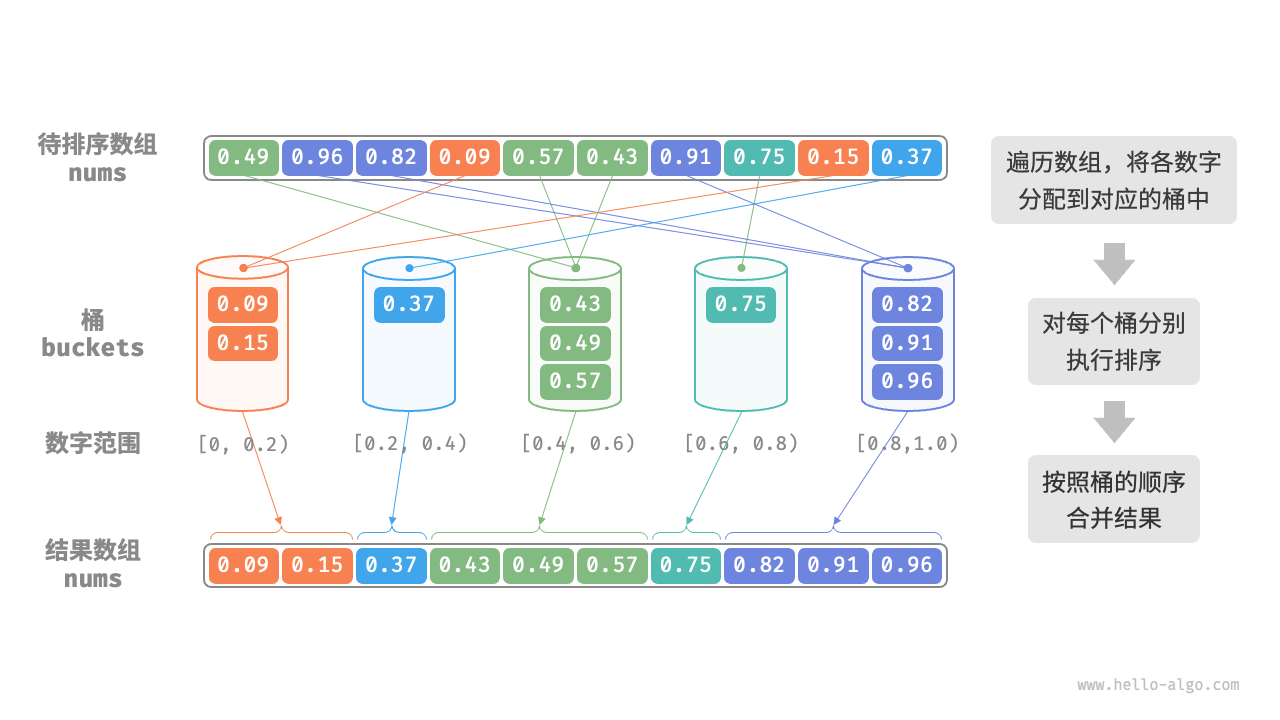
function bucketSort(nums: number[], size: number): void {
  const k = Math.floor(nums.length / size);
  const buckets: number[][] = Array.from({ length: k }, () => []);
  const min = Math.min(...nums);
  const range = Math.max(...nums) - min;
  if (range === 0) return;
  for (const num of nums) {
    const i = Math.floor(((num - min) / range) * (k - 1));
    buckets[i].push(num);
  }
  for (const bucket of buckets) {
    bucket.sort((a, b) => a - b);
  }
  let i = 0;
  for (const bucket of buckets) {
    for (const num of bucket) nums[i++] = num;
  }
}